
'The sooner Pakistan and India face these geopolitical realities, the better it will be for their own security and prosperity,' observes Ambassador M K Bhadrakumar.

The Tata empire turns 150 this year. R Gopalakrishnan, former director, Tata Sons Ltd, imagines a conversation among the group's founder Jamsetji, his son Dorabji, his successor, Nowroji Saklatwala, and his successor, J R D Tata.
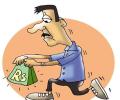
The Jan-Dhan accounts are zero balance accounts, comes with a life cover of Rs 30,000 per person, and an accidental cover of Rs 100,000. An active user of the account can also get overdraft facility of Rs 5,000 from banks.

'Tilting at the Government in English in front of India may make him feel like Joan of Arc, but without a feel for Bharat he will merely be Don Quixote,' says S Muraleedharan, former managing director, BNP Paribas.
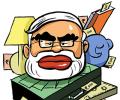
Declaring demonetisation a complete failure may turn out to be hasty, argues economist Ashok K Lahiri.

Greece awoke with a political hangover on Thursday after parliament approved a stringent bailout programme, thanks to the votes of the pro-European opposition, amid the worst protest violence this year.

'What made him different was that he was not a banker at all by temperament.' 'He was a businessman, a typical lalaji at that.' 'He had to win at any cost.'

'India missed the software products revolution (and now is in danger of missing the platform revolution), complacent that we are the software experts of the world based on IT services prowess,' points out Rajeev Srinivasan.

India's telecom sector has been through dizzying peaks, troughs, policy U-turns, court battles, brutal competition, and daily controversies. India could go back to a private sector duopoly with just Reliance Jio and Bharti Airtel surviving the mayhem. The third player, Vodafone Idea, could be history.

'Where in parliamentary democracies around the world do political parties drag Supreme Court judges in the middle marches of the night to decide who will rule?' asks Sunil Sethi.

The patience, discipline, and resolve displayed by 125 crore Indians, will play a critical role in shaping the future of the nation for years to come, the PM said.

You can use gold as a financial instrument to diversify your portfolio into hedging against uncertainties in the market, but for ambitious returns, you must explore opportunities in other asset classes such as equities, debts and real estate, says Adhil Shetty, CEO, BankBazaar.com.

'What will this supposedly more business-friendly government do if it gets a second term?' 'Important labour law and land reforms remain off the table.' 'Witness the arm-twisting of foreign players in e-commerce and all but one player in telecom -- and it is very hard to justify this perception that the BJP is business friendly.' 'There will also remain the real risk of ideas seemingly gleaned from the pages of Amar Chitra Katha, overlaid with PowerPoint presentations,' predicts Rahul Jacob.
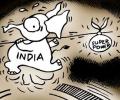
The first major devaluation of the rupee happened in 1966 when it was pegged against the US dollar at Rs 4.75/$
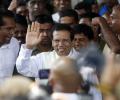
'Our policy is pro-Sri Lanka.' 'Burma is not the only girl on the beach in South Asia.''

The BJP still does not have a majority in Upper House of Parliament, the Rajya Sabha, and this will pose hurdles to the party's legislative reform agenda
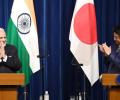
'Relations between India and Japan are robust and devoid of either shadow of history or any irritant.' 'In fact, there is plenty of warmth and goodwill earned over history. There are no negatives but only opportunities,' notes Dr Rajaram Panda.

Reserve Bank of India Governor Shaktikanta Das tells Anup Roy, Raghu Mohan and Niraj Bhatt that it is time for banks to lower interest rates and start lending to cash-starved finance companies after due credit appraisal and proper risk assessment.

The Kabuliwalas of Kolkata, traditional moneylenders, have seen their numbers shrink.

'We should expect a cold-blooded, transactional relation that requires a lot of engagement and mutual trust to sustain,' says Constantino Xavier, Fellow, foreign policy, Brookings India.
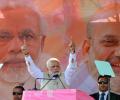
'The finance minister has told the BJP's core voters we are hearing you and we are sensitive to your aspirations.'

'You had earlier sent a Prime Minister from Assam (referring to Manmohan Singh) whom people do not even remember now'
A rising number of Greeks in rural areas are swapping goods and services in cashless transactions.

'Chinese real GDP growth is 7.1% and India's is 7.4%'.

It will have made uneasy viewing for coach Jorge Sampaoli and emphasised more than ever how reliant his side are on their talisman Messi, who has been struggling with a muscle problem.
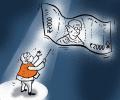
'We are at $2.7 trillion and 2024 is not far away.' 'The country will need to grow by 9% every year for 5 years continuously and raise the aggregate investment rate to 38% of GDP to achieve the government's target of turning India into a $5 trillion economy.' 'Given the fact that we are only growing at about 5% and our investment rates are only about 30%, it may take a number of years before we can reach that targeted level.'
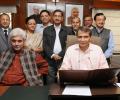
The railway minister has steered clear of populist traps and refrained from making grandiose announcements in terms of new trains and new rail routes. He should now emulate China, and rope in Japan in boosting the rail network, says Rajeev Sharma.

'If India is to emerge as a superpower, we must utilise our huge agricultural potential and not, as in past centuries, merely exploit our farmers,' says Colonel Anil A Athale (retd).
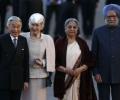
In recent years India-Japan relations have acquired rich economic content and strategic intents. Although the bilateral trade at $18 billion between the two countries is not very impressive and leaves much to be desired, the economic engagement between the two countries is both qualitatively and quantitatively noteworthy. India-Japan defence cooperation, however, has generated a lot interest among the strategic community in the context of rise of China. There has been a lot of speculation about India-Japan strategic partnership to hedge China, says Rup Narayan Das.

'Modi wants to reverse everything Nehru did, but is shy of touching his daughter's most unwise policies.' 'There is no example of this more stark than bank nationalisation,' says Shekhar Gupta.

After helping the government in policymaking since October 2014, Chief Economic Adviser Arvind Subramanian is returning to academics and will be teaching at Harvard Kennedy School on a visiting position. In an interview to Dilasha Seth and Somesh Jha, he says the ease of doing business agenda needs to move forward and India must try to integrate with the global value chains. Edited excerpts.

The decision to not attend the forum attended by 28 heads of state and 130 national delegations is a clear break from its usual policy of going along with the crowd.

Tibetan refugees in India face a bleak future, says Greg C Bruno.

Indians want change and progress. They should be willing to accept tough decisions, says Sanjeev Nayyar.

ISIS's online propaganda radicalises Muslim youth in Kerala. A revealing excerpt from Stanly Johny's new book, The ISIS Caliphate From Syria to the Doorsteps of India.

'The mood in Beijing is already nervous and feverously watchful.' 'Developments in China will be scrutinised as intensely and nervously as the ones in Washington,' says Claude Smadja.

How did Greece, the country of Archimedes and Socrates and Plato and Pythagoras, come to such dire straits, asks Ajit Balakrishnan.

Festive season is the mainstay of most brick and mortar retail chains.
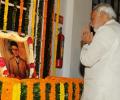
'There was the indisputable fact that Savarkar knew Godse, Apte and Karkare well, he had corresponded with them closely, and funded their extremely provocative newspaper, and they looked up to him as their icon.'

We tried our best to recover money from Vijay Mallya: Arundhati Bhattacharya
